Design for 10 years, not 2
A toddler's room becomes a schoolchild's room and then a teenager's. Keep built-in furniture in neutral finishes and bring in themes through wallpaper, bedding, decals and accessories that can be swapped as your child grows.
Safety first
- Rounded corners and edges on desks, beds and units
- Tall wardrobes and bookshelves fixed to the wall so they can't tip
- Soft-close hinges and drawers to protect small fingers
- Covered sockets and switches placed out of reach for young children
- No glass shutters at low height
- Low-VOC paints and finishes
Beds
Bunk beds save floor space for siblings sharing a room. A trundle bed slides out for sleepovers. A storage bed holds toys, bedding and out-of-season clothes.
The study zone
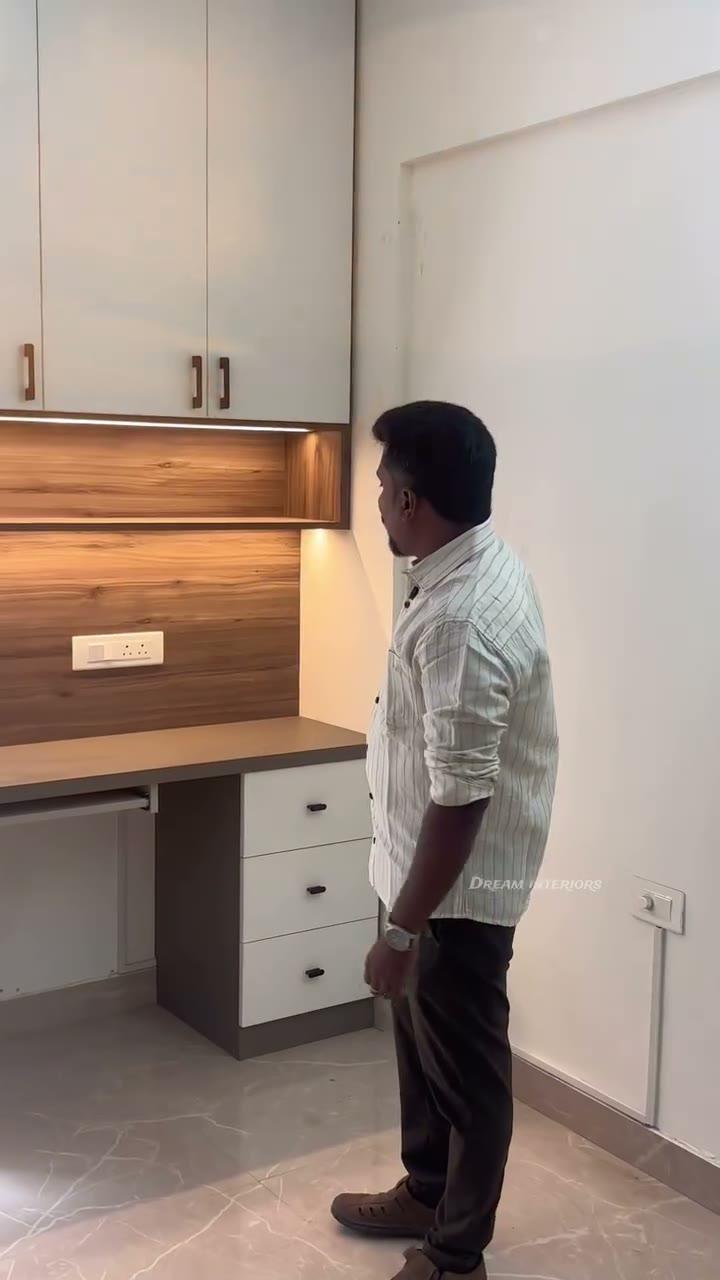
Place the desk near a window so daylight falls from the side, not from behind the screen. Add a task lamp, a pin-up board, shelves within reach and cable management for laptops and chargers. Plan the desk height for the child's age, with an adjustable chair so it works for longer.
Storage
Young children manage open low shelves and bins better than closed cupboards. As they grow, add wardrobes with adjustable rails and shelves that can move up, and a dedicated bookshelf.
Colours
A calm base — soft neutrals or pastels — with brighter accents in cushions, rugs and artwork works for every age and is easy to refresh.
Teen rooms and work-from-home studies
The same principles apply to a teenager's room or a home office: a comfortable chair, glare-free light, enough sockets, and soft surfaces such as curtains and rugs to reduce echo on video calls.
Kids' rooms by Dream Interiors
We design kids' bedrooms and study rooms with built-in wardrobes, desks and storage, and show you the room in 3D before production.
Explore our bedroom interior designs.